Follow John & Gregg Capturing the Essence of Wow..

Thursday, October 21

Exotic and Sustainable Travel in the Philippines


ShareThis


Are you dreaming of bliss on an island, or should I say many tiny Islands, far far away... of white sand beaches, grass-thatched roofs and rare birds singing in the trees above your hammock...of snorkeling, kayaking or even rock climbing? If so, the El Nido Resorts in the Philippines might be your destination.  They are located on Lagen Island and Miniloc Island within the protected area of El Nido. The 45 islands and islets and the surrounding sea present endless opportunities for adventure, nature appreciation, and even just simple pleasures. El Nido itself is a municipality located at the northwestern tip of the province of Palawan. The Municipality of El Nido is composed of 18 barangays (villages) covering a total land area of 50,000 hectares. Its population of 27,000 people, is a mix of native Palaweños, with a heavy presence of migrants from other parts of the Philippines.

Lagen Island Resort has a total of 50 rooms with a variety of accommodation styles: 18 Water Cottages built on stilts, 9 Beachfront Cottages with a perfect view of the entire cove, 20 Forest Rooms and 3 Forest Suites built on the fringes of a tropical forest. All rooms have floors made of antique woods and furnishings made of old wood reclaimed from old houses. 
The air-conditioned Clubhouse serves as the main dining area. On the lower level are the boutique, game area, library, clinic, and a conference room that can accommodate up to 70 persons, depending on configuration. The 12 x 25-meter swimming pool, designed with an even depth of 4 feet so as not to touch the roots of  trees that lie underneath, is located in front of the clubhouse. Nearby is a poolside bar.

The sound of waves gently lapping at the beach accompanied by the ambient reflection of lights on the pool creates a memorable dining experience under the stars.  It is the scenic landscape, crystal clear waters, and relative isolation that fascinate and attract travelers to this special place.  The rooms aren't too shabby either!

 Each cottage, room, and suite is air conditioned and has a private toilet and shower with bath amenities , a mini-bar, stereo system with CD player, and IDD telephone.
At the back of the resort is a trail that passes through a forest and ends in a private cove.  If you decide to venture far from your hammock on that white sand beach, you will find many unique features. You may discover Vigan Island, also known as Snake Island, because of its winding white “snake’s tail” of sand.  If you enjoy history, visit  Cudugnon Cave,  one of El Nido’s stunning geological formations.  Archaeologists believe it was used as a burial site during Neolithic times. This ancient cave was formed by a million years of weathering action that hollowed out large portions of  emergent limestone layers.

You may want to paddle your way to nature’s wonders, using the special sea kayaks, and regular kayaks available at the Marine Sports Center.  El Nido ("nido" in Spanish means "nest") is named after the edible nests of Swiftlets (Collocalia Fuciphaga) found in the crevices of its limestone cliffs.  These nests are the main ingredient for the gourmet nido soup.  Considered  a showcase of Palawan’s geology and diverse wildlife, El Nido's majestic limestone cliffs stand guard over clear waters, with hundreds of species of tropical fishes and corals, and three species of endangered sea turtles.  

The resort offers a wide range of activities, from soft adventure sports to more leisurely pursuits. The more adventurous can even do some rock jumping!

Facilities at the Miniloc Island Resort are equally attractive.  They include an open-air restaurant located at the clubhouse, a boutique, game area, beach bar, and a conference room that can accommodate up to 40 persons.  Snorkeling areas, dive sites, lagoons, secluded beaches and picnic sites are all within easy reach of both resorts. There are over 100 private beach locations readily accessible from both resorts.
Miniloc Island Resort features grass-thatched roofs on 50 rooms with a variety of accommodation styles: 5 Water Cottages, 2 Waterside Cottages, 5 Seaview Rooms and 10 Deluxe Seaview Rooms built on stilts, 13 Garden Cottages surrounded by tropical plants, 3 Cliff Cottages nestled high in the hillside, and 12 Beachside Rooms.
All of the 50 rooms are made of local and natural materials and are equipped with an air-conditioning unit, mini bar, hair dryer, private toilet, shower facilities, and private verandas that offer views of the cove and nearby islands.

At Miniloc’s very doorstep, off the long dock, guests can snorkel alongside 3-foot-long Jackfish and hundreds of Sergeant Majors, Damsel fish, Fusiliers, and other multi-colored tropical fishes.  You can be adventurous and explore them on your own, or be accompanied by a Marine Sports Guides.  A complete line of snorkeling equipment is available free on a  first come first serve basis.
The forests of El Nido are host to more than 100 species of birds, a large number of which are endemic to Palawan. If you take an invigorating walk amongst the giant trees and lush rainforest, you might see a monkey, Palawan Hornbill and other wondrous flora and fauna. If you end up at a beautiful cove on the west coast of the island, you may choose a 15-minute kayak paddle back to the resort. It's a great aerobic workout!

AND it's SUSTAINABLE...The El Nido Resorts  strive to operate with minimal impact on the environment. They believe in respecting our natural resources through responsible tourism. The resorts work closely with the community in the prevention of illegal fishing, promotion of coastal clean-ups, environmental education campaigns, monitoring of snorkeling and dive sites, and installation and maintenance of mooring buoys. Both properties have desalinating plants to reduce the sourcing of water from watersheds in mainland El Nido. Sewage Treatment Plants (STPs) ensure that resort sewage is non-damaging to the environment, and recycled water from STP is used for flushing and irrigation. Residual waste is sun-dried and used to fertilize plants in the gardens.   The resorts also make significant annual donations to a Conservation Trust Fund for future environmental projects.

Related Posts with Thumbnails

Saturday, October 16

WOW Saturday Shopping with 1st Dibs


ShareThis


Pair of glass and aluminum wall sconces by Jean Perzel
USA, 1940's

Wing Back by Mogens Koch
Denmark, 1930's

Rosewood Craft Extention Dining Table by Jeffrey Greene
USA, 1967

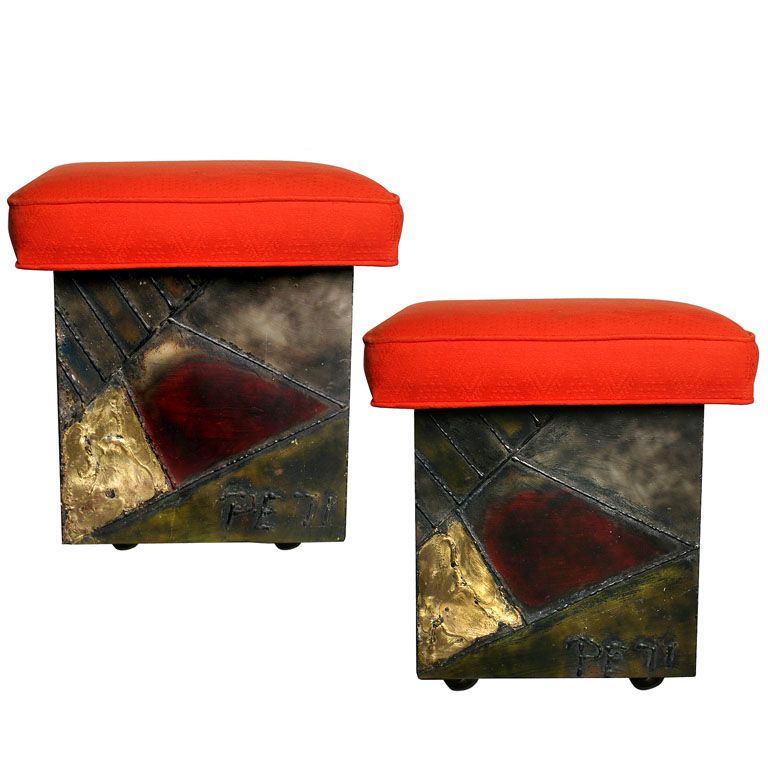
Pair of Paul Evans Studio Upholstered Stools
USA, 1971

Takashimaya Building NYC Pair of Bookcases
American, 1993

Belgian Lockers
Belgium, 1800's

Hans Wegner Papa Bear Chair and Ottoman
Denmark, 1950's

Restauration Period Pinewood and Painted Copper Lined Bathtub
France, early 19th Century

Early Edward Wormley for Dunbar Walnut Desk
USA, early 1940's

Pair of 4' Hand Thrown Ceramic Lamps
USA, 1970's

Rosewood bench by Paul Frankl for Johnson Furniture
USA, 1940's

Queen Size Four-Poster Bed by Tommi Parzinger
USA, 1960's

Related Posts with Thumbnails

Friday, October 15

Sustainable Living In San Fransisco's Presidio District


ShareThis

The Belles Townhomes are San Francisco's first LEED Platinum-certified multi-family housing units. The seven unit multi-family building is designed and built by Kieran Timberlake and LivingHomes in a modern vernacular.  It's an adaptive reuse project which has turned a hospital into an apartment building in the city's historic Presidio district (and National Park!)
Its own sustainable community, the Presidio Landmark was built with the love of nature, culture, community, and urban conveniences in mind. It's within walking distance to both the Lobos Valley Overlook and the artsy boutiques and Asian markets of the Richmond District. Laurel Village cafes and shops are nearly as close as the serpentine cliffs of Baker Beach. A short bike ride brings you to the Golden Gate Bridge and the Marin Headlands—or a 20-minute bus ride lands you in the Financial District. 


Each home features an energy dashboard to monitor energy usage in hopes that residents will become more aware of their usage and lower their footprint. Rainwater is collected from the roof and stored in an underground aquifer to minimize stormwater runoff and drought- tolerant plants are used in the landscaping. Over 90% of the interior spaces receive natural daylighting.  With solar panels on the roof, energy monitoring and efficient appliances inside, rainwater collection and a lot more,  new tenants are sure to feel happy-go-lucky.

Each 3-bedroom unit is a 3-story design with low- or no-VOC carpets, paints or adhesives and uses a high concentration of recycled-content materials.  Each home has its own roof top solar system to provide some of the energy needs. The first and second floor feature the garage, storage and the three bedrooms and bathrooms; the third floor contains the main living spaces.
This is truly city living that aligns with your values, your interests and your desire to live life to the fullest.

If you haven't seen our current Platinum LEED Certified project on Butterfly Beach in Montecito, check it out here.


Related Posts with Thumbnails

Wednesday, October 13

Futuristic Shell Homes


ShareThis

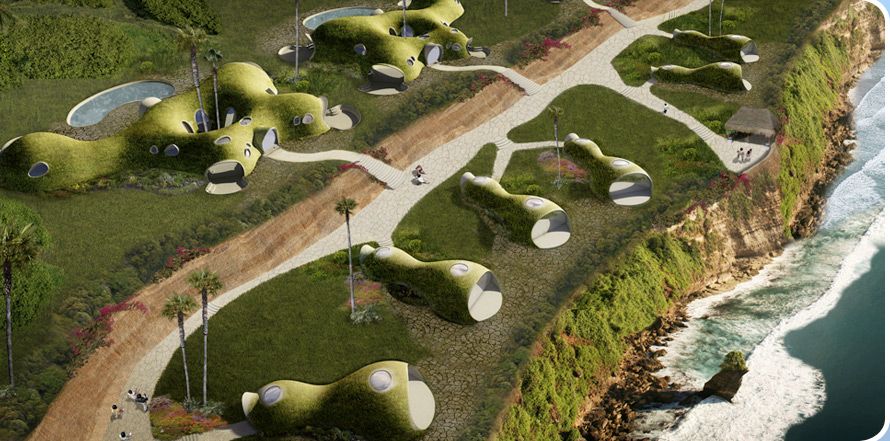
"The Jetsons" meets James Bond and equals Sustainable Design.  Architect Dante Bini, who received widespread attention in the 1960's era of Buckminster Fuller and Saarinen’s swooping TWA terminal, is making a comeback with his son Nicolo Bini. Together they have developed a protype for a home to be built in in Palm Springs this winter. It will be made up of Binishells, self-supporting concrete shells erected in hours using only air pressure. 
This LEED platinum certified home featuring the latest eco-technologies and materials, will set the bar for low impact environmental construction.
Revisiting his father's work several years ago, Nicolo realized that, with some tinkering, the technology could be incredibly green. He supplies some impressive stats to back up that claim: because of the simplicity of their design and construction, the shells reduce energy use by up to 80%. Even better, they also reduce costs by half, and can be erected in a third of the  time needed for traditional construction.   
Binishell is an efficient, low-cost and low-carbon building technology that uses an inflatable membrane (basically a balloon) on a concrete foundation.  It's covered with concrete, and then inflated.  When the concrete is lifted to the required height, it is allowed to set. The membrane is then removed and is ready for use in the next structure. These shelters are strong and able to resist hurricanes, flooding, earthquakes and fires. They are easily deploy-able anywhere as they can be fabricated from locally available materials and require no factories for prefabrication and no heavy machinery for installation.
Binishells are ideally suited to eco-resorts. Their minimal carbon footprint, minimal visual impact, unique look and feel and the fact they can be made from locally available material makes them an ideal choice for eco-developments internationally.
The structure above can be built for a small fraction of the construction costs of conventional building.  But, airports or maybe even space ship terminals could be in the future. Binishells can be used for a variety of large projects. Several 120-foot-diameter domes with multiple floors have already been built. They can therefore be used to build large public or private structures less expensively, faster, stronger and more ecologically than any other system. The rendering below shows three hour-glass- shaped Binishells joined by a tensile structure. The resulting structure would not only be contemporary and visually appealing, but also resistant to high winds, earthquakes and highly efficient in terms of resources and energy used in the life cycle of the building. 
These unique buildings can be used for everything from high-end residential, to school gymnasiums, commercial buildings, or low cost housing and emergency shelters. Love it.

Related Posts with Thumbnails

Tuesday, October 12

Bio Glass by ECOverings


ShareThis


In searching for new exciting materials for our current project on Hill Road in Montecito, I came across some extraordinary and beautiful 100%-recycled glass tiles.  The colors are amazing when playing off natural light and even more so when back-lit.  Distributed by Coverings Etc., this exciting company was founded in 1998 to source innovative natural stone and mosaics. They expanded in the new millennium to cater to a growing popular demand for eco-friendly and engineered-stone surface materials. They are a a member of the United States Green Building Council (USGBC) and use of their products contributes to LEED points that are essential when going for LEED Certification--especially the Platinum level we are striving for.

Amazing. Right?

The six shades will make it hard to choose your palette.  Emerald Forest (below)
Fossil Amber


Oriental Jade
Aquamarine

Malachite

White Diamond
ECOVERINGS  has many other products that are equally as elegant and environmentally friendly.

ECO-GRES  is highly sustainable, easy to install and maintain. High impact and slip resistant, it is also scratch, stain and fade resistant.  And, there's no need to ever seal or wax.

BIO-LUMINUM™ is a Future Friendly material made from 100% post-consumer recycled aluminum from reclaimed aircraft parts. 100% unique, it's also 100% recyclable. 
The ECOVERINGS® line of products are naturally occurring, recycled, and/or manufactured with concern for the conservation of natural resources.
They are also a RedDot Design Award winner of 2010.

Related Posts with Thumbnails

Tag Clouds

This work is licensed under a Creative Commons License permitting non-commercial sharing with attribution. GLOBALLY GORGEOUS is a trademark of Maienza Wilson in the United States and other countries.Developed by Hari